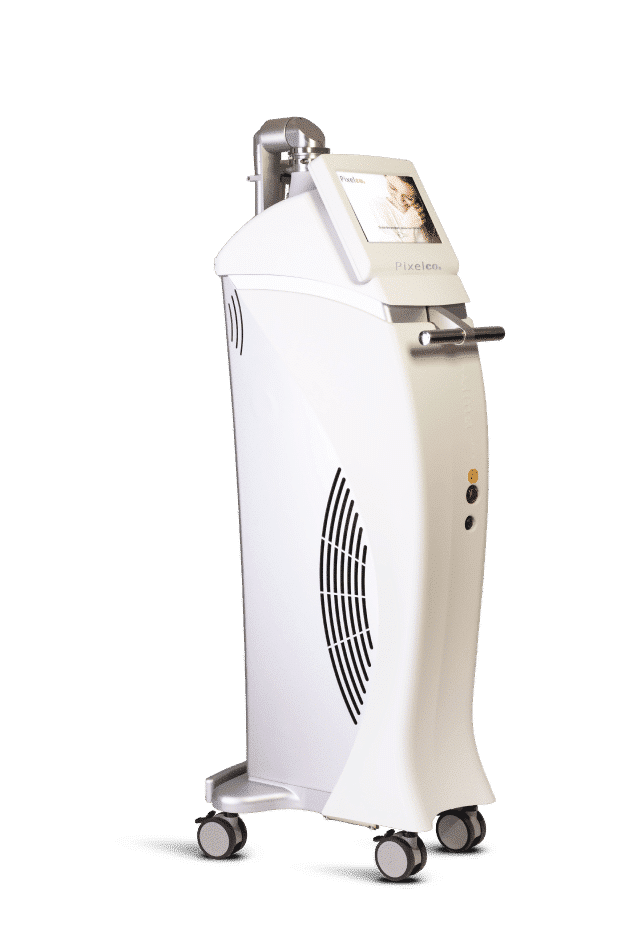
Pixel CO2 is an RF-excited fractional CO2 laser operating at 10,600nm wavelength using Diffractive Optical Elements delivering energy as micro-pixels in 9×9 or 7×7 patterns. Unlike traditional full-field CO2 ablation, fractional delivery creates pixel-sized perforations leaving surrounding tissue intact. This stimulates collagen production and skin healing while preserving undamaged areas, enabling faster recovery with dramatic age-defying results and customizable thermal treatments.
Pixel CO2 treats wrinkles, fine lines, acne scars, surgical scars, stretch marks, sun damage, photodamaged skin, uneven texture, pigmentation, age spots, large pores, vascular lesions, cherry angiomas, acne, keratosis pilaris, seborrheic keratosis, lentigines, and skin tags. The fractional approach addresses both superficial and deep skin concerns. Deep thermal application stimulates collagen and elastin production delivering rejuvenation, tightening, smoothing, and color correction results.
Patients experience 5-10 days downtime depending on treatment depth and individual healing. Most return to normal activities within a week. Redness and mild swelling typically resolve within 5-7 days. The fractional technology significantly reduces downtime compared to traditional full-field CO2 resurfacing. Customizable intensity settings allow practitioners to adjust treatment depth, enabling patients to select appropriate downtime compatible with their schedules and preferences.
Yes. Alma’s 10,600nm CO2 laser is intended for ablation, vaporization and coagulation of soft tissue. Focus applicators, available in two spot sizes, combine cutting and coagulation in a single setting and work in continuous, single pulse and repeat modes, so physicians can perform precise surgical work without switching applicators. Alma also notes that the system’s applicators can be used for gynecology and plastic surgery patients.
Pixel CO2 fractional technology is safer for diverse skin types than traditional full-field CO2 lasers. Fractional treatment significantly reduces hyperpigmentation, hypopigmentation, scarring, and infection risks. The preserved surrounding tissue promotes faster healing. Parameters can be customized for different skin tones and sensitivities. Practitioners adjust intensity and pattern settings to accommodate individual patient characteristics. Pre-treatment with pigment inhibitors recommended for darker Fitzpatrick skin types.
Topical numbing cream is applied pre-treatment minimizing discomfort. Most patients report tolerable sensations during treatment, often described as mild heat or warmth. Cooling systems further enhance comfort. The fractional approach reduces pain compared to traditional CO2. Treatment time varies by area size and settings. Post-treatment mild tenderness and discomfort readily managed with prescribed aftercare. Modern laser technology ensures patient comfort throughout the resurfacing process.